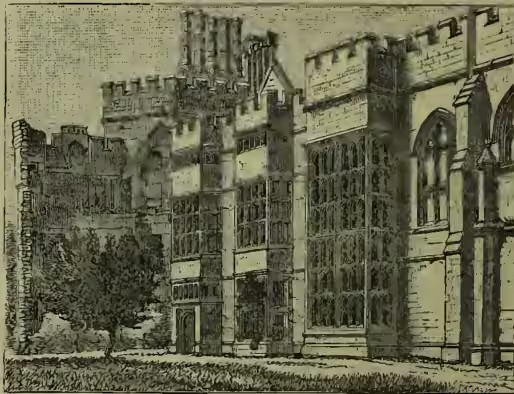
Bay-window, or (corruptly) BOW-WINDOW, a window peculiar to late Gothic and Renaissance architecture, so called because it forms a bay or projecting space outwards from a room. The external walls of bay-windows are, for the most part, either rectangular or polygonal, the semi-circular form, from which the term bow was probably derived, having been unknown prior to the introduction of the debased Gothic. Though mentioned by Chaucer, bay-windows are not found in any of the styles before the Perpendicular, during the prevalence of which they were frequently introduced, particularly in halls. Bay-windows generally reach to the floor, and are frequently supplied with a seat, which is called the bay-stall. There are many very beautiful examples of bay-windows in the college-halls of Oxford and Cambridge. When used in upper stories, such windows are supported on corbels, or large projecting mouldings. See ORIEL.