Thistle, ORDER OF THE, called also the Order of St Andrew, is of no very ancient date. The earliest known mention of the thistle as the national badge of Scotland is in the inventory of the effects of James III., who probably adopted it as an appropriate illustration of the royal motto, In defence. Thistles occur on the coins of James IV., James V., Mary, and James VI.; and on those of the last they are for the first time accompanied by the motto, Nemo me impune lacesset. A collar of thistles appears on the gold bonnet-pieces of James V. of 1539; and the royal ensigns, as depicted in Sir David Lindsay's armorial register of 1542, are surrounded by a collar formed entirely of gold thistles, with an oval badge attached. This collar, however, was a mere device until the institution, or, as it is generally but inaccurately called, the revival of the order of the
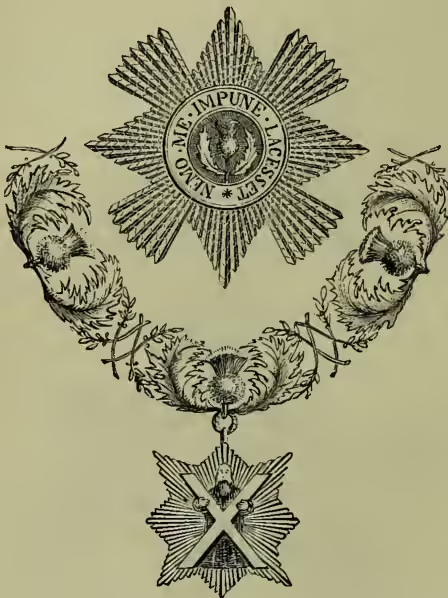
Thistle by James VII. (II. of England), which took place on May 29, 1687. Statutes were issued, and eight knights nominated by James; but the patent for the institution of the order never passed the Great Seal. After falling entirely into abeyance during the reign of William and Mary, the order was revived by Queen Anne, December 31, 1703, and the statutes then issued still, with some changes, govern the order. By them the word 'lacesset' in the motto was altered to 'lacessit.' The number of knights was originally fixed at twelve, a number raised by George IV. in 1827 to sixteen, at which it now stands. Provision was made for a Chancellor of the Order, but none has ever been appointed; the other officers of the order are the Dean, the Secretary, Lord Lyon King-of-arms, and the Usher of the Green Rod.