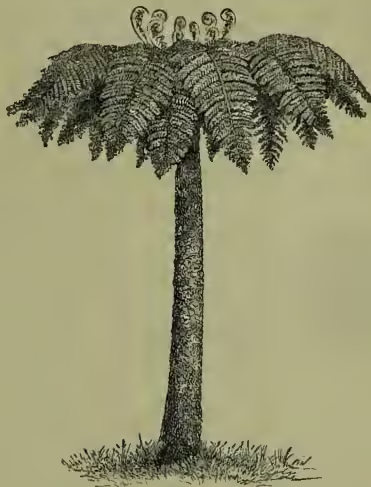
Tree-fern, the common name for ferns with arborescent trunks, of which there are many species, all natives of tropical and subtropical countries. Their stems are formed of the consolidated bases of the fronds, surrounding a central column of soft tissue, in which the circulation takes place. In the landscape their columnar trunks, surmounted by graceful crowns of spreading fronds, have a similar effect to the palms. The height to which they attain varies from 2 or 3 feet to 80 feet, according to the species. The Alsophilas and Cyatheas are the giants of the tribe. A. excelsa, a native of Norfolk Island, is stated by Captain King to grow to the height of 80 feet. Preserved in the British Museum is a trunk of A. brunoniana, an Indian species, which measures 45 feet. The pith or soft cellular matter in the centre of the stem of A. excelsa and A. medularis, the latter a native of New Zealand, is greedily eaten by swine, and when cooked resembles inferior turnips in taste and texture. Numerous species of tree-fern are cultivated in British conservatories.