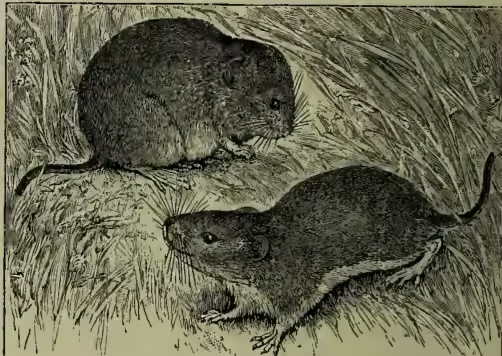
Vole (Arvicola), a genus of rodents typical of the sub-family Arvicolinae, which also includes the lemmings (Myodes), the musk-rats (Fiber), and several related genera. The genus Arvicola includes over forty species distributed over Europe, Asia, and North America—all more or less like rats and mice. In Britain there are three—the Water-vole (A. amphibius), the Field-vole (A. agrestis), and the Bank-vole (A. glareolus). The water-vole is about the same size as the brown rat, and rat it is often called. It has dark brown or black fur, a tail about half the length of the body, and very strong hind feet, with five rounded pads on their lower surfaces. It burrows by the banks of streams and feeds for the most part on vegetable food. In summer the female has three or four litters of two to seven young. The water-vole does not occur in Ireland. The field-vole, or short-tailed 'field-mouse,' is about the size of a common mouse, but the body is plumper and the tail shorter. It has brownish-gray fur; its hind feet have six pads. It lives in fields and woods, feeds on vegetable food, is very prolific, and often does much damage. The bank-vole is like the field-vole, but has a 'more or less rusty or rufous-coloured back, larger ears, and a longer tail.' Its habits are like those of the field-vole.
Plagues of field-voles have repeatedly occurred in various parts of Britain. Thus in 1876 they destroyed much pasturage on the Borders and in Yorkshire, and in 1892 they did very serious damage to farms in the south of Scotland. In Roxburgh and Dumfries the plague is said to have extended over 80,000 acres, and a royal commission inquired into the subject. Mild winters and the destruction of the vole's natural enemies—owls, kestrels, stoats, weasels, &c.—are doubtless among the causes of the plague. Various attempts by means of poison, traps, pitfalls, and the like have been made to get rid of the plague; and in Greece Professor Löffler has attained some success by infecting them with a contagious disease. It seems, however, most likely that ultimate success will depend on a restoration of the balance of nature disturbed by the destruction of the 'vermin' which in natural conditions keep voles and similar animals in check.