Whitethroat (Sylvia cinerea), a bird of the family Sylviidae, a summer visitant to the British Isles; plentiful during summer in the greater part of England and in Ireland, but rarer in the north of Scotland, where, however, it is also extending its range, breeding regularly as far north as the Dornoch Firth. It is also common during summer in the south and middle of Europe, and is found even in the north. It places its nest in a low bush, or among a tangled mass of brambles and weeds. Its food consists of insects, berries and other fruit.
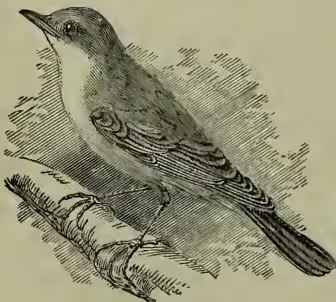
Its song is not very sweet, but is delivered with great energy, and it seems to vie with other birds in singing, refusing to be outdone. It is very lively and amusing as a cage-bird, and very easily tamed. The whole length of the whitethroat is 5½ inches. Its plumage is brown of various shades; the breast and belly brownish white, tinged with rose-colour in the male. The Lesser Whitethroat (Sylvia curruca) is a species of much rarer occurrence, and less extensive in its distribution in the British Isles. Whitethroats belong to the same genus as the Blackcap (q.v.) and the Garden Warbler (S. hortensis), which is not uncommon in Britain, and almost rivals the blackcap in the richness of its notes, at the same time being apparently intolerant of rivalry, for it avoids the blackcap's haunts.