Zebu (Bos indicus), a kind of ox very nearly allied to the common ox, of which naturalists generally regard it as a mere variety, although some think it a distinct species. It is also called Indian Ox or Brahmin Ox. The most conspicuous distinctive character is a large fatty hump on the back above the shoulders. The legs are also rather more slender and delicate than in the European ox. The hump attains a very great size in animals plentifully supplied with food and not compelled to work; in those which are ill fed or hard worked it is comparatively small. Mr Vasey found the number of caudal vertebrae in the zebu to be only eighteen, whilst in the common ox it is twenty-one. The zebu is diffused over India, China, the Asiatic Islands, Madagascar, and the east coast of Africa. There are many breeds, differing very much in size,
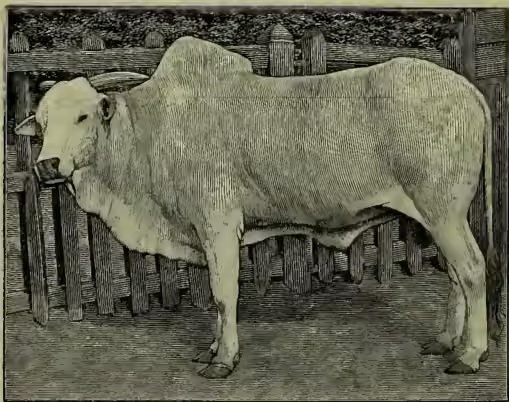
(From a Photograph by Gambier Bolton, F.Z.S.) the largest being larger than any oxen of Europe, whilst the smallest are not much larger than a large mastiff. The hump of the largest breeds is said to be sometimes 50 lb. in weight, and by English residents in India is esteemed delicious for the table. There are hornless breeds; but most of the breeds have short horns. There is a breed with two fatty humps, one placed immediately behind the other. In China is a small variety combining the characters of Bos indicus and B. taurus; the hump is very small. The voice of the zebu resembles the grunting of the yak almost as nearly as the lowing of the ox. The zebu is used in India both as a beast of draught and of burden, is yoked in the plough, and is occasionally used for riding. It can travel from 20 to 30 miles a day, and is very gentle and docile. The Brahminy or sacred bulls of the Hindus, consecrated to Siva, are all of this kind of ox. They are caressed and pampered by the people, and to feed them is deemed a meritorious act.