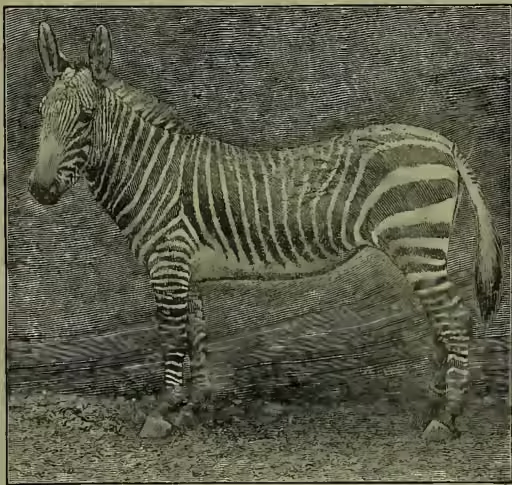
(From a Photograph by Gambier Bolton, F.Z.S.)
Zebra, a generic name given to the group of striped Equidae—all of which are peculiar to the African continent—and thus including the Dauw or Burchell's Zebra (Equus burchelli) and its variety Equus chapmani, a species inhabiting the plains of the interior, the Quagga (q.v.), and the true or Mountain Zebra (Equus Zebra). The type of the entire group is more asinine than equine, and in the true zebra the ass-like character is heightened by the longer and fuller ears and the barer tail—the latter furnished only with long hairs towards the tip, the tail of the quagga and Burchell's zebra being equine and flowing. In all the hind-legs are without warts. The true or Mountain Zebra, Equus or Asinus Zebra, the Wilde Paard (wild horse) of the Cape Dutch, stands about 12 hands high at the shoulder, and is of a strong and muscular yet beautifully symmetric form. The body colour is of a silver white, and the black markings, which are fuller and more even than in the other members of the group, extend to every part of the body except the stomach and inner part of the thighs. Even the legs are closely ribboned in black and white down to the hoofs. Upon the light, clean head (with the exception of the ears, upon which the black and white markings continue) the markings change to brown, while the muzzle is of a rich bay tan. The mane is hogged and upstanding, but somewhat less shaggy than in Burchell's zebra. The legs are short, clean, and wiry, yet well proportioned to the sturdy frame. The true zebra runs in small troops and inhabits the most rugged and inaccessible mountain-ranges of South Africa and Abyssinia, and, it is believed, is found in no other part of the continent. It has been identified as far to the east as the Libomba Mountains between Swaziland and the seacoast, and westwards upon the ranges of Great Namaqualand. Formerly abundant upon every range of the Cape Colony, its occurrence there is now much more restricted, and will, apparently, not long hence cease entirely. Its activity and surefootedness are remarkable, its senses of sight, smell, and hearing very acute, and the least alarm is sufficient to send the whole herd scampering off, with pricked ears and whisking tails, to inaccessible retreats among the mountains. The zebra has been domesticated and driven in harness, and in the old days the young were for this purpose captured by the Boers and exported to Mauritius; but even when taken young the temper is always vicious and uncertain. A new variety of the true zebra (differing in some respects from the South African type, especially in its closer and finer markings), supposed to have been captured in the highlands of Shoa, north-east Africa, was presented by Menelek, king of Shoa, to President Grévy in 1882. This variety has been named Equus Grévyi.