Blazon, or BLASON (Ger. blasen, 'to blow,' as with a horn), a heraldic term which originated in the custom of blowing a trumpet to announce the arrival of a knight, or his
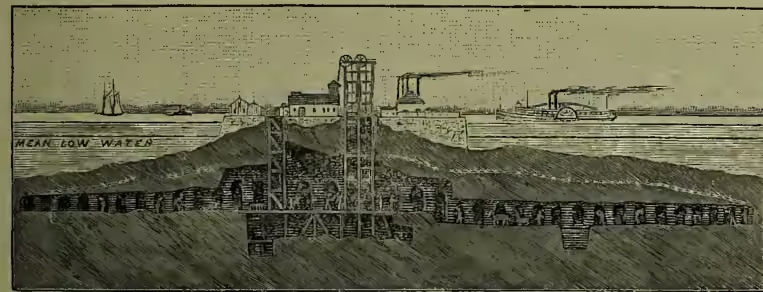
Long Island Sound, New York, was the occasion of the greatest blast the world has yet seen. The island was about 9 acres in extent, and for blowing up this huge mass, it was honeycombed under low-water mark with tunnels—24 galleries running in one direction, intersected by 46 at right angles. These galleries were pierced in every direction with drill-holes, of which there were bored 12,561, with a depth of 9 feet, and a diameter of 3 inches—in all, more than 20 miles of drill-holes. Into each of these was inserted first, a cartridge of rackarock—one of Sprengel's patent explosives, consisting of entrance into the lists at a joust or tournament. The blast was answered by the heralds, who described aloud and explained the arms borne by the knight. Blazon and blazonry thus came to signify the art of describing a coat of arms in such manner that any one acquainted with the technical language of heraldry may be able to draw it accurately from the description. The rules of blazon are explained under HERALDRY.