Bluebird, BLUE WARBLER, BLUE RED-BREAST, or BLUE ROBIN (Sylvia or Sialia sialis), an American bird, which, from the confidence and familiarity it displays in approaching the habitations of men, and from its general manners, is much the same sort of favourite with all classes of people in the United States as the redbreast is in Britain. Except in the southern states, it is chiefly known as a summer bird of passage, appearing early, however, as a harbinger of spring, and visiting again 'the box in the garden, or the hole in the old apple-tree, the cradle of some generations of ancestors.'
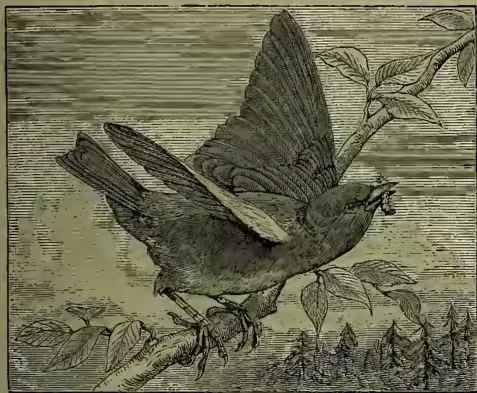
Their soft agreeable note strikes one of the hours on the living timepiece of the seasons, and has been beautifully called by Burroughs the 'violet of sound.' They are celebrated in American poetry; thus Lowell speaks of
The bluebird, shifting his light load of song
From post to post along the cheerless fence.
Few American farmers fail to provide a box for their nest. In size the bluebird rather exceeds the redbreast, which, however, it much resembles in general appearance. Its food is also similar. The upper parts of the bird are of a rich sky-blue colour, the throat and breast are reddish chestnut, and the belly white. The female is duller in colours than the male. It lays five or six pale-blue eggs, and has two or three broods in the season. The male is remarkably attentive to his mate, and both exhibit extraordinary courage in driving away intruders from the vicinity of their nest. A hen, with her brood, has been seen to flee from the attacks of an enraged and pugnacious bluebird. The bluebird is known as an inhabitant of the Bermudas, Mexico, the West Indies, Guiana, and Brazil.—In the western and in the more northern parts of North America its place is taken by nearly allied and very similar species.