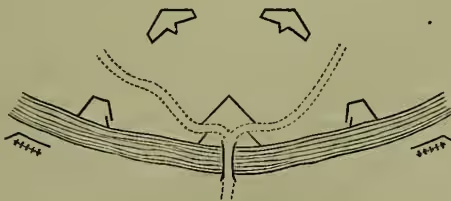
Bridge-head, or TÊTE-DU-PONT, is an arrangement of defensive works on the far bank of a river which runs at right angles to the line of advance of an army. It consists of a central work immediately covering the bridge or bridges, and a line of detached redoubts, on a wide arc, at some distance from it. Thus, the enemy's artillery fire is prevented from reaching not only the bridge itself, but also the wide space behind the redoubts upon which the troops can deploy without molestation after crossing the river. The ground in front of the redoubts is swept by batteries placed on the hither bank, and therefore a bridge in the centre of a re-entering bend of the river is well placed for such defence.—A double bridge-head has a similar system of works on each bank. It is necessary when, the course of the river being in the same direction as the line of advance, it is desired to retain the power of manœuvring on either bank.