Canopy (Lat. conopum; Gr. kōnōpeion, from kōnōps, 'gnat' or 'mosquito') was originally a mosquito-curtain. Herodotus (ii. 95), Horace (Epod. ix. 9), and others of the ancient writers mention gnat-curtains (conopea). Subsequently the same term came to be used for the projecting covering and hangings of a bed, without reference to their original use, and latterly for any projecting covering of a similar form, to whatever use it might be adapted, or of whatever materials it might be formed. Canopy is thus used to signify the covering which is borne over the heads of kings and other persons of distinction, and still more frequently over the Holy Sacrament and the image of Christ in processions in Roman Catholic countries. See BALDACHIN.
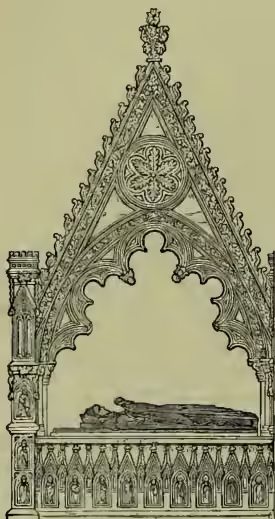
In Gothic architecture, canopy is the term applied to the stone coverings usually projected over statues, both on the exterior and in the interior of buildings, to protect them from the rain and dust. They were introduced as early as the 12th century, and were then designed so as to resemble a small gabled roof or the top of a building furnished with gables and turrets. As the style advanced, the design of the canopies was carried out in harmony with the other features of the various periods, becoming in the Decorated period more like a pinnacle in shape and ornament, while in the Flamboyant and Perpendicular canopies partook of the florid and fantastic character of those styles.
The term canopy is also applied to the gable-shaped and crocketed mouldings frequently placed over doors, windows, niches, &c.; also to ornamental stone coverings placed over tombs, of which fine examples may be seen in Westminster Abbey. The wooden coverings erected over the prebendaries' stalls in cathedrals, which are of infinite variety of design, are also called canopies, as well as the lofty ornamental tops which are often introduced over bishops' thrones, pulpits, and altars.