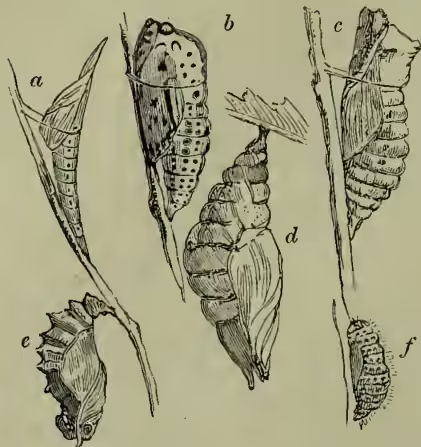
Chrysalis, or CHRYSALID, a term originally applied to the golden-coloured resting stages in the life-history of many butterflies, but sometimes extended to all forms of pupæ or nymphs—that is, to the second stages in the history of insects which undergo complete metamorphosis. It is the stage which results from the fasting quiescence of the generally active and voracious larva or caterpillar, and also, of course, the stage which after one or rarely two moults awakens into the winged insect or imago. During the whole or part of its often prolonged existence, the pupa or chrysalid is externally quiescent; but internally most profound structural changes are going on, which amount in many cases to a thorough reconstruction, and always result in the development of wings and sexual organs. Chrysalids vary greatly in degree and duration of quiescence, in habit, in the condition of their appendages, and in the development of external covering. The colours also vary greatly, and in some cases the golden or otherwise coloured appearance is doubtless protective. They are generally found hidden away in protected corners, or underground, or suspended from the leaves of plants. The completion of the internal reconstruction is soon followed by a writhing restlessness, in the course of which the chrysalis frees itself from encumbrances, and emerges into freedom and flight. Mr Poulton has made some exceedingly beautiful experiments on the effect of external surroundings on pupæ, and has shown how gilded surroundings are associated with the appearance of gilded chrysalids. See BUTTERFLY, CATERPILLAR, INSECTS, METAMORPHOSIS.