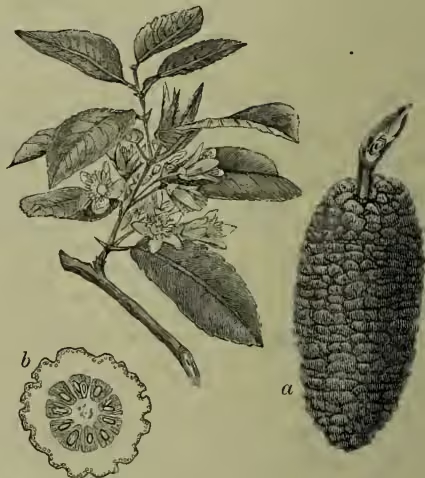
a, fruit; b, transverse section of fruit.
Citron (Citrus medica), a tree cultivated in the south of Europe and other warm temperate or subtropical countries for its fruit; a native of northern India. By many botanists the lemon (C. Limonium), the lime (C. Limetta), and the bergamot (C. Bergamea) are reckoned varieties; but it at any rate avoids confusion to describe these separately. The fruit is large, warty, and furrowed. The pulp is acid and cooling, and is used in the preparation of syrups, lemonade, &c.; but the part chiefly valued is the thick and tender rind, which has a delicious odour and flavour, and is preserved or candied. From this also the fragrant Oil of Citron, or Oil of Cedrate, used by perfumers, is procured. In Germany the name cedrate is extended to all kinds of citron, and the name citron is usually given to the lemon. The fruit of the largest kinds (var. maerocarpa) sometimes weighs 5 lb. In the United States the name citron is applied to different varieties of the melon, especially one resembling the water-melon, but edible only when made into preserves or pickles. It is probable that the citron is meant in some passages of the Old Testament where the word apple is used in the English version.