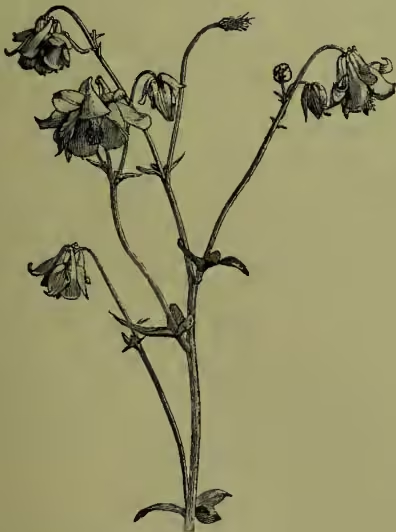
Columbine (Aquilegia), a genus of Ranunculaceæ, with five coloured sepals, which soon fall off, and five petals each terminating below in a horn-shaped nectary. The name (from Lat. columba, 'a dove') is derived from the resemblance of the flower to a cluster of doves, of which the convergent nectaries suggest the heads and necks, and the divergent sepals the fluttering wings. They are natives of the temperate and colder regions of the northern hemisphere. One, the Common Columbine (A. vulgaris), is found in woods in some parts of Britain, and has long been familiar as an inmate of flower-gardens. It is a perennial, generally 2 to 3 feet high, with flowers of considerable beauty. Columbine was formerly much esteemed for medicinal virtues, which are now seldom heard of.—Some of the other species are very ornamental, and are pretty common in flower-borders.