Column, a round pillar, usually provided with a base and capital, employed in architecture for the support of an Entablature (q.v.) or other superstructure. Fig. 1 shows in detail the names of the different parts of a column. Columns are doubtless derived from the primitive use of stems of trees in a similar position. Thus the early Egyptian columns are evident imitations of bundles of reeds bound together, or of the stems of palm-trees (figs. 2 and 3). A flat stone laid beneath to prevent the column from sinking, and another on the top to receive the lintel, would naturally suggest the base and capital. In the Classic 'orders' the column played an important part, the proportions of all the different members being regulated by the diameter of the column. In Greek Doric the height of the column varied from 5 to 8 diameters, and the other orders from 8 to 10 diameters. Columns invariably taper from base to cap, with a slight swelling in the centre called the entasis, and they were frequently carved with flutings or channels (see FLUTING). The most conspicuous distinction was the capital. The characteristics of the three Grecian orders, with the plain Doric capital, the Ionic volutes, the Corinthian leafage, will be seen from the accompanying cuts (figs. 4, 5, 6), and will be further dealt with in GRECIAN ARCHITECTURE; the Tuscan column is also shown in fig. 1. The composite column retained the general proportions of the Ionic, with the Corinthian capital. For a Byzantine capital, see BYZANTINE ARCHITECTURE. In Gothic, columns are also much used, but their variety is infinite, and not regulated by any fixed
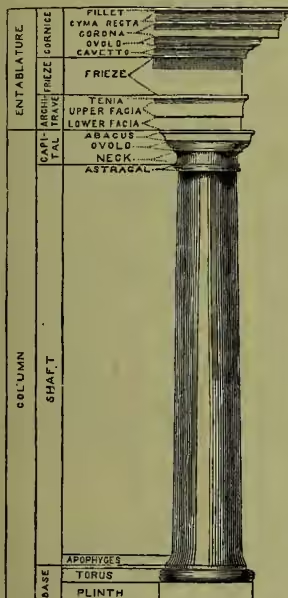
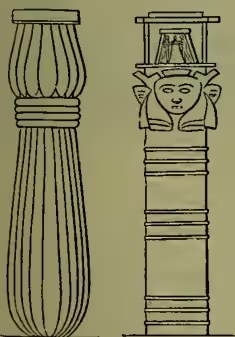
Fig. 3.
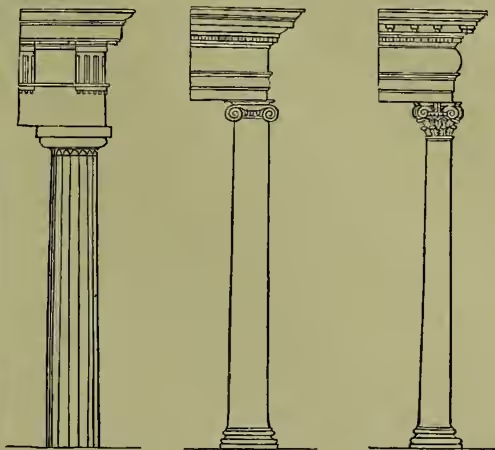
Fig. 5.—Ionic.
Fig. 6.—Corinthian.
proportions like the Classic columns. The articles on the various styles of architecture show many forms of columns. A single column was sometimes erected to commemorate some remarkable event or great personage, such as Trajan's Column in Rome.