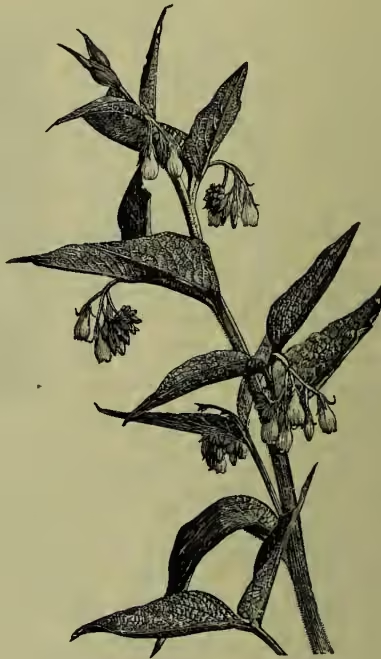
Comfrey (Symphytum), a common palæarctic genus of Boraginaceæ, somewhat coarse perennial herbs, although occasionally to be seen in flower-borders. S. officinale (blue) and S. tuberosum (yellow) are frequent in shady and moist places. S. officinale was formerly much esteemed as a vulnerary. Its young leaves and its blanché shoots are still occasionally used as boiled vegetables. The Prickly Comfrey (S. asperimum), a native of Siberia, 6-10 feet in height, has been recommended for feeding cattle. The stamens are covered in this genus by five awl-shaped processes pushed in from the outside of the corolla, and meeting so as to form a false bottom impassable to ants, flies, and other small honey-thieves, but which can be thrust aside by the humble-bees which alone fertilise the flower. Many bees, however (especially B. terrestris and one or two others), prefer to bite a hole in the side of the corolla below this cover, and the flowers may thus be seen to be visited both in the legitimate and illegitimate way. See the section on Fertilisation in the article FLOWER.