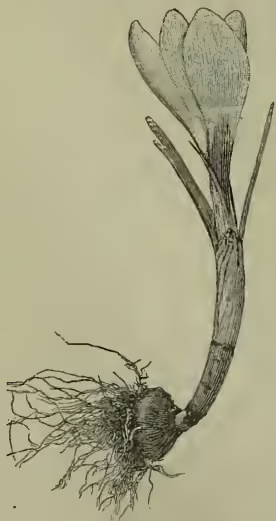
Crocus, a very beautiful genus of Iridaceæ, all palæarctic, and particularly abundant in the Mediterranean countries and Asia Minor. Crocuses have long been cultivated in flower-gardens, particularly C. vernus, the purple crocus, with its many violet, white, or striped varieties; and C. luteus, and other yellow species; all so welcome in early spring. The saffron crocus (C. sativus, see SAFFRON) and other species flower in autumn. These must not be confused with the meadow saffron, often called autumn crocus (Colchicum, q.v.), which is a liliaceous plant, from which the true crocuses can at once be distinguished by their inferior ovary, and three instead of six stamens. Bulbocodium vernum is a pretty spring flower, also much resembling crocus, but closely akin to colchicum. Two species of crocus occur wild in England, C. nudiflorus and C. vernus, but the latter at least is merely naturalised. The flowers of one or two species are fragrant. Owing to the shortening and thickening of the stem, the ovary is subterranean, hidden among the leaf-bores, but in ripening it grows out upon a long thin procumbent pedicel, and thus deposits its seed at a sufficient distance from the parent plant. The thickened axis is a Corm (q.v.). It is necessary frequently to take up crocuses and plant them anew, on account of the manner in which the corms multiply. See CORM; and Mard, Monograph of the Genus Crocus (1887).