Curlew (Numenius), a genus of birds of the order Grallatores, and of the same family (Scolopacidae) with the snipe, sandpiper, avocet, stilt, &c. The bill is much longer than the head, slender, curved, and compressed; the face and head are feathered; the legs are slender, and part of the tibia is naked as well as the shank; the tail is short, and the folded wings extend about as far as the tail. The plumage is lark-like. The genus is cosmopolitan in its distribution. The Common Curlew (N. arguatus), the Whaup of the Scotch, frequents the seashores in winter, and elevated moors in summer. Its peculiarly weird and plaintive cry is familiar to every visitor of the uplands. It feeds on worms, molluscs, and insects, and its long bill enables it to seek its food in marshy or boggy ground. A slight nest of leaves or other dry materials is built in some tuft of rushes or among long grass or heath, and usually contains four eggs. The curlew is good eating.—
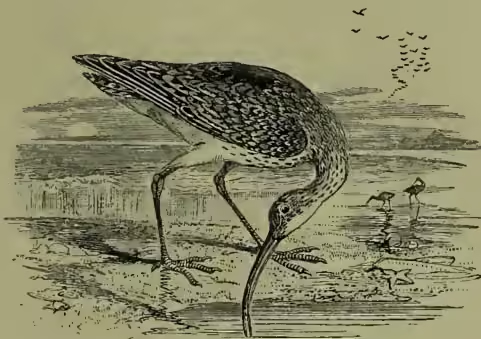
The Whimbrel (N. phaeopus) is a smaller species, much resembling the common curlew. Like the latter it is very widely distributed in the Old World, and frequently occurs on the shores of Britain, though apparently breeding only in the most northerly moors. North America has several species of curlew, some of which extend their summer migrations to very northerly regions.