Dentalium (Lat. dens, 'a tooth'), or Elephant's Tusk Shell, a remarkable genus of molluscs, type of a small class called Scaphopoda. The shell is tubular, like an elephant's tusk, open at both ends, and lined by an almost completely tubular 'mantle.'
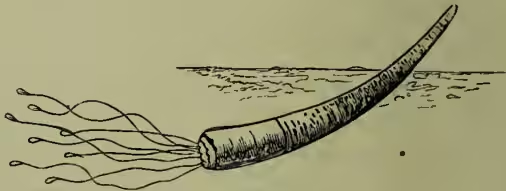
The animal has an indistinct cylindrical head with a mouth at its extremity, surrounded by a circle of tentacles. Two pads at the base of the head and above the foot bear ciliated contractile filaments, possibly respiratory. The 'foot' is long and divided into three at the end. The mouth includes a rasper. There are no eyes, but an ear-sac is present. Neither heart nor gills are developed. The sexes are similar and separate. The larva is ciliated and free-swimming. The type is of much zoological interest, but its affinities are still uncertain. The animal lives with the anterior end plunged into the sand on the sea-coast, at depths of ten to a hundred fathoms. By means of the foot they can creep slowly. They feed on minute animals, and have an almost cosmopolitan distribution. The class includes two or more other genera. D. entale occurs off British coasts; and about forty living species are known. The genus occurs as a fossil from Carboniferous strata (or perhaps earlier) onwards. The shells are used for currency and for ornament by the Indians of the northern Pacific coast of America. See Lacaze-Duthiers, Histoire des Dentales (1856-58).