Easter Island, a lonely Pacific islet in 27° 8' S. lat., and 109° 24' W. long. Discovered by Roggeveen on Easter Day 1722, and visited in 1773 by Captain Cook, it is 47 sq. m. in area; is entirely volcanic, with many extinct craters rising more than 1000 feet; and is fertile, but badly off for water. Sheep and cattle grazing was started by a French house in Tahiti, after the departure in 1878 of the missionaries, with 300 natives, for the Gambian Archipelago, 500 having been shipped to Tahiti four years earlier. The natives still left are fair Polynesians; between 1860 and 1882 they dwindled from 3000 to 150, as well from polyandry as from emigration. They have little to say as to the origin of the picturesque remains that have made Easter Island famous.
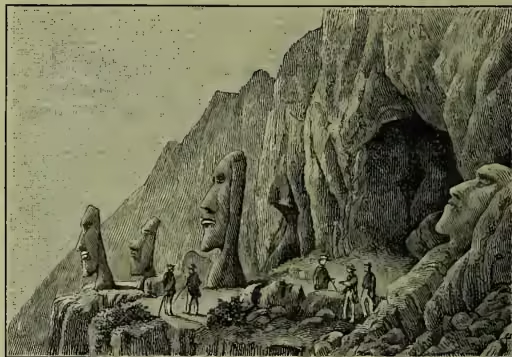
These include over 500 rude stone statues or busts, possibly portraits of famous persons, not idols, varying from 3 feet high to 70. There are besides 100 stone houses, with painted interiors and (undeciphered) incised tablets. Most of the natives were carried off in 1863 by the Peruvians to work guano. The island is, since 1888, a Chilian convict station. See Thomson's Report to the U.S. National Museum (1892); and Stanford's Australasia, vol. ii. (new ed. by Guillemand, 1895).