Emu (Dromæus), a genus of running birds or Ratitæ in the cassowary family. There are two species, both Australian—viz. the Common Emu (D. novæ hollandiæ) and the Spotted Emu (D. irroratus). They differ from the Cassowaries (q.v.) in several marked features—e.g. the head and neck are feathered except on cheeks and throat, there is no 'helmet,' nor are there wattles on the neck, the bill is broad, and the claws of the three toes are almost of equal length. The emu is a large bird, standing about 6 feet in height. The plumage is like that of the cassowary; the colour is predominantly dull brown, darker on the head, neck, and middle line of the back, lighter beneath. The naked parts of head and neck are grayish-blue, the bill and feet brownish. The young are striped with black. The wings are of course rudimentary, but the legs serve the bird well both in running and kicking.
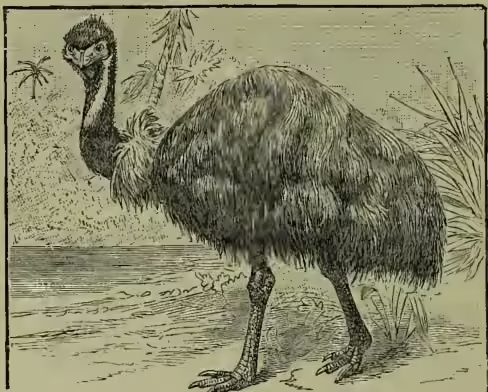
Timid and peaceful in character, the emu trusts to its speed for safety. It is valued on account of its beef-like flesh, abundant oil, and edible eggs, but is unfortunately being destroyed with too great carelessness. The plains of the interior are now the chief haunts; the food consists chiefly of roots, fruits, and herbage. The note is a curious booming sound. The emu is not polygamous like the Ostrich (q.v.); true pairing occurs. The eggs are placed in a scooped-out cavity in the earth; they have a dark-green shagreen appearance, and measure on an average 4 × 3½ inches. About forty are laid in a summer; the male incubates the first set, and is then relieved by the female, who has by that time finished her laying. The period of incubation is three months. The development has been recently studied by W. A. Haswell (Linn. Soc. New South Wales, 1887). The Spotted Emu, restricted to Western Australia, has often bred in captivity or attempted domestication in Britain and elsewhere.