FLYING LEMUR, or Colugo (Galeopithecus), an aberrant Insectivore, with a parachute provided with special muscles, and even more efficient than in the preceding mammals. The hairy fold of skin begins behind the throat, includes fore and hind limbs as far as the claws, and extends along the tail to the tip. The animal has been observed to swoop over a distance of 70 yards. The claws are used in climbing; the lower front teeth are remarkably comb-like; the general colour is said to resemble mottled bark; the brain is very small.
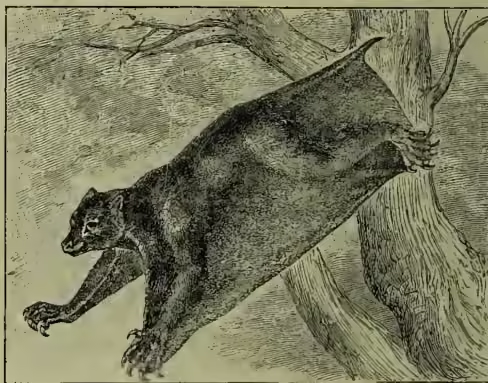
The flying lemurs are about 20 inches in length, are natives of the Indian Archipelago, inhabit lofty trees in dense forests, and feed chiefly on leaves and fruits, though said at times to eat insects, eggs, and even small birds. They are nocturnal in their habits, and very inoffensive, scarcely attempting to bite even when seized. Their voice resembles the low cackling of a goose. The female bears a single young one at a birth, and has a pair of teats on each side near the armpits. The Pelew islanders greatly esteem them as food, but they have a rank, unpleasant smell. The zoological position of Galeopithecus is difficult to determine; it has been referred to the lemurs, to the bats, and with most justice to the Insectivores, while Wallace regards it as 'a lateral offshoot of some low form, which has survived during the process of development of the Insectivora, the Lemuroidea, and the Marsupials, from an ancestral type.' Two species (G. volans and G. philippinensis) are usually distinguished. The flying foxes (Pteropidae) are true bats and true fliers. See BAT, BIRD, DRAGON, FEATHERS, FLYING, FLYING-FISH, INSECT, PHALANGER, PTERODACTYL, SQUIRREL.