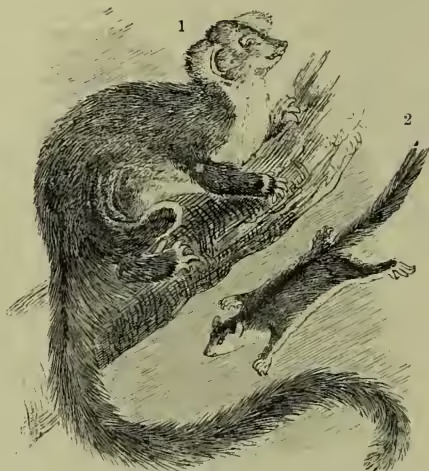
2, Flying Mouse (Petaurus pygmaeus).
FLYING PHALANGER, or Flying Opossum (Petaurus), a genus of marsupials, natives of New Guinea and Australia, where they are called Flying Squirrels, Sugar-squirrels, &c. Nearly allied to the Phalangers, they are distinguished by a hairy membrane or fold of the skin extending along the flanks, and used as a parachute to enable them to leap to great distances. This membrane extends along both fore and hind legs almost to the toes, but does not appear behind the hind-legs, nor include the tail. They are capable of modifying their course in the air, although not of true flight; and their aerial evolutions are very graceful. They repose during the day, and become active in the evening, feeding on fruits, flowers, leaves, insects, &c. A New Guinea species is as large as a cat; one of the Australian species is scarcely larger than a mouse, and is called Flying Mouse. The genera Belidens and Acrobata have also parachutes. See PHALANGER.