Froth-fly, also called FROTH-HOPPER, FROG-HOPPER, FROG-SPIT, common names for numerous insects parasitic on plants, on which the larvæ and pupæ are found surrounded by a frothy spittle. They are included in the family Cicadellidæ in the order Homoptera, and are related to the Aphidæ, Cicadas, and Lantern-flies. The family is a very large one; the members very beautiful in form and colour. The young stages, which are very like the adults, except in the absence of developed wings, suck their plant hosts, and thereupon surround themselves with the familiar froth which issues from the hind end of the gut. The froth is popularly called cuckoo-spit or frog-spittle, from fancies entertained as to its origin. It is sometimes so abundant, on willows for instance, that it drops from the branches. In some cases it may be helped by an exudation from the wounded plants. The adults have long hind-legs, and are able to hop about with some activity. The commonest British species, Aphrophora spumaria, is a yellowish-green insect, towards half an inch long, particularly addicted to willows; another common green form, Tettigonia viridis, is prevalent in meadows; Cercopis sanguindenta, in red and black, also occurs; while Tylocyba, Jassus, and Ledra are abundantly represented in Europe. In tropical countries the Cicadellidæ are still more plentiful and beautiful. The nearly-related family Membracidae includes many most extraordinary insects (see fig.)—e.g. in the genera Bocydium and Centrotus, with bizarre outgrowths from the first segment of the thorax.
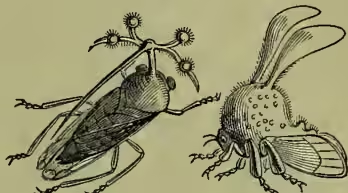
Bocydium globulare.