Gavial (Gavialis), a genus of reptiles of the Crocodile (q.v.) order, conspicuously differing from true crocodiles and from alligators in the great length and slenderness of the snout. The teeth are very numerous, about 120; they are more equal in size than those of the other animals of this order.
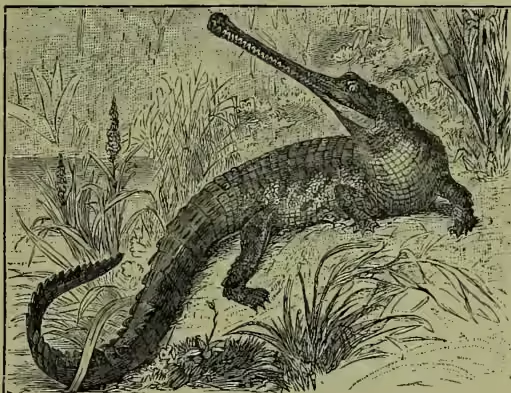
The best-known species, G. gangeticus, inhabits the Ganges. It attains a length of 24 feet; but, owing to the slenderness of its snout, it is esteemed less dangerous than a true crocodile of smaller size. The gavial feeds chiefly on fishes and carcasses, and preys more casually upon mammals. A cartilaginous swelling at the extremity of the muzzle seems to have given rise to Ælian's statement that the crocodile of the Ganges had a horn at the tip of its snout. In some parts—e.g. Malabar, the gavial is held sacred, worshipped, and petted. A smaller species from Borneo and Java is distinguished as G. schlegelii. See CROCODILE.