Glyptodon (Gr., 'engraved tooth'), a gigantic fossil animal belonging, like the Megatherium (q.v.) and the Mylodon (q.v.), to the Edentata, but of the family of the Dasypodidae or Armadillos.
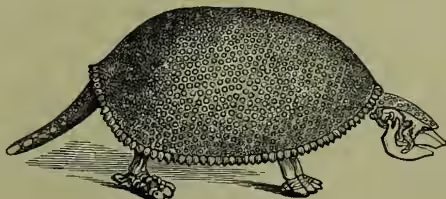
It is found in the post-tertiary deposits of the pampas of South America, and four species have been described. The back and sides of the creature were covered with a carapace of thick, nearly hexa- gonal, bony scutes, which in some cases was nearly 6 feet long. The head was similarly protected by a helmet of bony plates, while its tail was completely sheathed in a casing of the same kind. The glyptodon must, from the shape of the carapace, have looked like a huge tortoise than an armadillo. Unlike the latter, it had no movable bands in its armour, and therefore could not roll itself up when attacked by its enemies. Its teeth, eight in each jaw, had each two lateral sculptured grooves, whence the name.