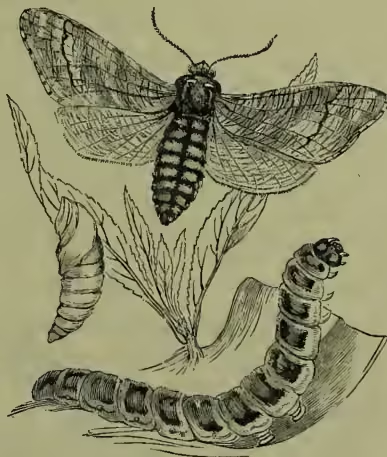
Goat-moth (Cossus ligniperda), a large moth common throughout Europe and Asia. It measures three inches or more across the wings, and has a thick heavy body. The general colour is yellowish-gray; the upper wings are mottled with white, and marked with many irregular black lines; the lower are of an almost uniform ash-colour. The caterpillar is about three inches long when full-grown, and has a yellowish colour, the upper parts flesh-like, the head black. It inhabits and feeds on the wood of willows, poplars, and elms, making holes large enough to admit a finger, and often causing the destruction of the tree. Its size, abundance, and voracity make it a formidable devastator of trees. When alarmed or handled it emits a disagreeable goat-like odour, which cannot be removed from the hands even by frequent washings. It takes two or three years to attain maturity. The reddish-brown pupa is enclosed in a cocoon of chips cut by the jaws of the creature. The caterpillar has been regarded by some as the cossus of Roman epicures, but this was more likely the larva of some large beetle.