Golden-eye Fly (Chrysopa perla), also called Lacewing Fly, a neuropterous insect, common in Britain; pale green, with long thread-like antennæ, long gauze-like wings, and brilliant golden eyes.
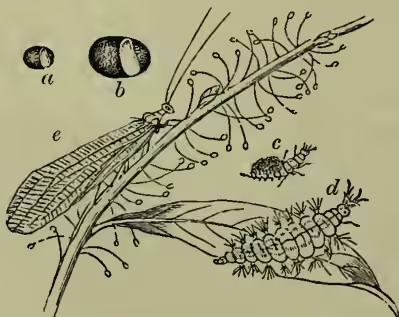
Its flight is feeble. The length, from the tip of the antennæ to the tip of the wings, is almost an inch and a half, but the insect without wings and antennæ is not more than one-third of this. The female attaches her eggs, in groups of 12 or 16, by long hair-like stalks, to leaves or twigs, where they have been mistaken for fungi. The larvæ are ferocious-looking little animals, rough with long hairs, to which particles of lichen or bark become attached; they are called aphis-lions, and are very useful in the destruction of aphides, on which they feed. The pupa is enclosed in a white silken cocoon, from which the fly is liberated by a lid. The general facts above stated are also true of another very common species (Ch. vulgaris)—a delicate green insect, with a body about half an inch long. The species of Chrysopa emit a very disagreeable odour. The nearly allied genus Hemerobius is also abundantly represented in Britain and elsewhere.