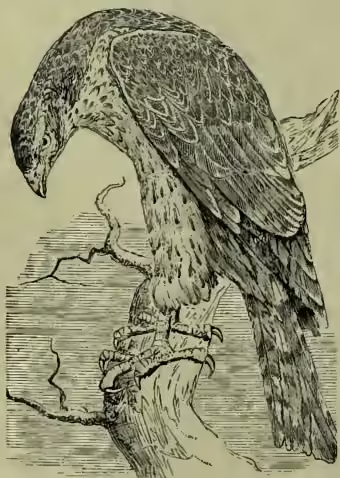
Goshawk (lit., 'goose-hawk') (Astur), a genus in the family Falconidæ, nearly related to the sparrow-hawks (Accipiter), and like the latter distinguished from the falcons proper by not having a toothed or notched bill. The British species (A. palumbarius) is now only a visitor, and a rare one. It is common in the forests of north- ern and central Europe, and ranges as far east as Japan, and as far south as Morocco and Egypt. It is a rapacious bird, following small mammals and game-birds in swift, persistent, and rapidly altered flight. The prevalent colour of the plumage is ashy-brown; the size of the females, which are decidedly larger, is about two feet. The nest is large, built of sticks, and placed in a tree. The eggs (four) are bluish-gray in colour, and laid in April or May. The goshawk used to breed in Britain, and though termed 'ignoble' was employed in Falconry (q.v.) for hunting ground-game, on which it naturally preys.
The goshawk of the northern United States (A. atricapillus) is larger and handsomer, but otherwise very like the European species. Audubon describes its meteor-like flight, the power of steering afforded by the long tail, its vigilant industrious rapacity, and the characteristic erectness of its attitude when perched or engaged with its prey. A stray specimen, said to have been shot in Perthshire, is preserved in the Edinburgh Museum. The Australian Goshawk (A. nova hollandiae), sometimes called a white eagle, is remarkable in being 'apparently a permanent albino.'