Graffiti (Ital. graffito, 'a scratching'), or WALL-SCRIBBLINGS, the name given to certain classes of mural inscriptions and drawings found at Pompeii, Rome, and other ancient cities in Italy. They are generally scratched, with a stylus or similar sharp instrument, or scrawled, with red chalk or charcoal, on walls, door-posts, and portico-pillars, and seem to be the work of idle schoolboys, loungers, triflers, and the like 'do-nothing' folk; but some were executed with more serious intention. Accordingly we find that the subjects that oftenest occur are doggerel verses, quotations from the poets, amatory
ΑΥΓΕΙΑΝΑ ΚΑΡΔΕΝΝΑΜ
Fig. 1.—Specimen of Graffiti—Auge amat Arabienum ('Auge is in love with Arabienus').
effusions, names with opprobrious epithets attached, coarse and often obscene words and figures, rude caricatures, especially of gladiators, of which fig. 2 is a specimen, and other instances of the thousand and odd ways in which the impulses of the restless idler prompt him to express his fancies. Amongst the more serious examples there are electioneering admonitions, playbills, and similar public announcements, philosophic apophthegms, notices of household events, time-tables of domestic work, and exclamations and sentences of even tragic import. These scribbings and rude drawings derive importance from the fact that, like Punch and similar comic journals, they serve as an admirable index to the current life of the people, especially in Pompeii, where the greatest number of them have been discovered. Without them we should have a far less adequate idea of the street-life of the ancient Roman people. They also throw much light upon
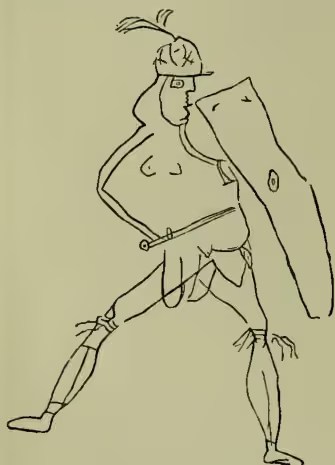
Nero's Golden House, and tombs on the Via Latina, as well as in the Catacombs. These last consist for the most part of lists of mere names, pious prayers and wishes, and invocations to the martyrs. The first collection of graffiti from Pompeii was published by Bishop Christopher Wordsworth in 1837, and is reprinted in his Miscellanies (1879). All that have been discovered and published up to the present time are to be found in vol. iv. of Corp. Inscr. Lat. (1871, edited by Zangemeister under the title Inscriptiones Parietariae Pompeianae, Herculanenses, et Stabianae) and the supplementary volume. The inscriptions in the Oscan characters, of which there are two varieties, as there likewise are of both the Greek the phraseology and idiom of the vernacular spoken towards the end of the 1st century A.D. in the cities of southern Italy. Three languages, or rather three alphabets, were used—Latin, Greek, and Oscan. Of these Latin was much the most commonly employed. In Rome graffiti have been found on some of the great buildings of the ancient city, as the Palace of the Caesars, and the Latin, are not contained in the collections just quoted; but they will be found in Fiorelli's Inscr. Osearum Apographa (1854). Compare also Garrucci's Graffiti de Pompei (Paris, 1856), and Edinburgh Review, vol. ex.