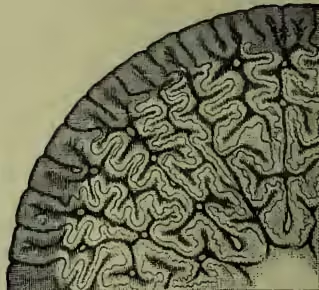
Labyrinthodonts, or STEGOCEPHALI, a race of extinct Amphibians, the remains of which are found in the Permian, Carboniferous, and Triassic strata. Many of them were giants compared with our modern amphibians, from which they also differed markedly in possessing an armature of bony plates in various degrees of completeness. The order includes numerous genera, some of the salamander type, others limbless like snakes, and leading on to the modern Cæcilians.
The name Labyrinthodont refers to the maze pattern exhibited on a transverse section of the teeth of some genera. Some of these ancient forms were probably responsible for footprints in the rocks which used to be placed to the credit of a more or less mythical animal, Cheirotherium. See Textbook of Palæontology by Nicholson and Lydekker (Edin. 1890).