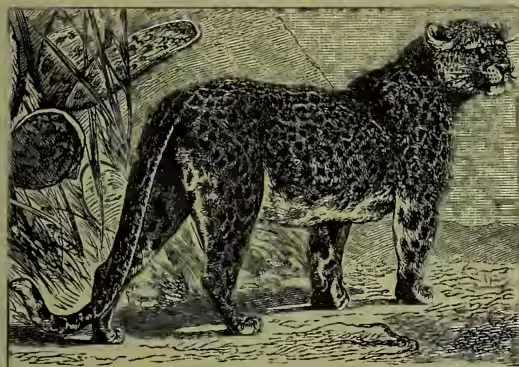
Leopard (Felis pardus), one of the larger Felidae (q.v.), now generally supposed to be identical with the panther. Great confusion has prevailed in the nomenclature: the panther and pardalis of the ancients are not certainly known; the jaguar was erroneously described as the panther by Buffon; the puma is often called panther in America; the leopard is known by the name of tiger in Africa; and, as Sir J. E. Tennent tells us, it is by mistake often called cheetah in Ceylon. The leopard is at home in Africa, from Algeria to Cape Colony; it is also found in Asia, from Palestine through central Asia to Manchuria. The ancients, distinguishing the leopard by non-existent attributes from the panther, gave it the name on the supposition that it was a hybrid between the lion (leo) and the pard or panther (pardus); as the giraffe or camelopard was thought to be a hybrid of the camel and the pard.
Supposing the leopard and panther to be one species, we may describe it as characterised by a peculiar gracefulness, slenderness and flexibility of form, with a very long tail, and spotted fur, the spots being arranged in numerous rows along the sides, and each spot composed of five or six small spots arranged in a circle or rosette. The general colour is yellowish; the lower parts lighter; the spots darker than the general colour of the fur. A black variety is known which is not a distinct species. The leopard is extremely agile, and possesses the power of leaping and also that of climbing trees in great perfection. It haunts wooded places, and is seldom to be found in open regions of long grass, like the tiger. Deer and antelopes are its habitual prey; but it is equally ready to feed on pigs, poultry, or whatever animals may be found in the vicinity of a farm or village. The size and strength of the leopard render it as dangerous to man as any of the Felidae; but it generally seems to dread and flee from man, unless assailed. It is very capable of domestication.