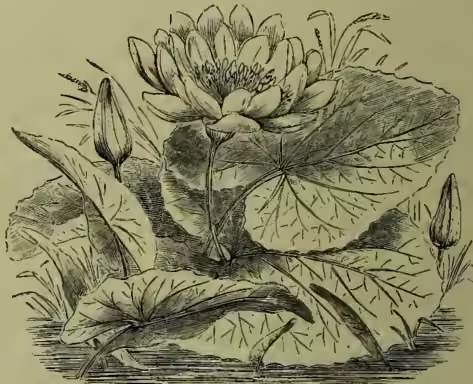
Lotus. The name Lotus (Lat. Lotus) was given by the Greeks to a number of different plants whose fruit was used for food. One of the most notable of these is the Nymphaea Lotus of the north of Africa and the south of Europe, a shrub belonging to the natural order Rhamnæ (see JUJUBE).—The fruit of the Diospyrus Lotus, or Date Plum (q.v.), is the European Lote.—The name lotus was also given to several beautiful species of Water-lily (q.v.), especially to the Blue Water-lily (Nymphaea carulea) and the Egyptian Water-lily (N. lotus), which grow in stagnant and slowly running water in the south of Asia and north of Africa. The Nymphaea lotus grows in the Nile and adjacent rivulets, and has a large white flower. The root is eaten by the people who live near the lake Manzaleh. The rivulets near Damietta abound with this flower, which rises 2 feet above the water. It was the rose of ancient Egypt, the favourite flower of the country, and was often made into wreaths or garlands, placed on the foreheads of women, or held in their hands, and smelt for its fragrance. It frequently appears in the hieroglyphs, where it represents the Upper Country or Southern Egypt, and capitals of columns, prows of boats, and heads of staves were often fashioned in its shape. In mythology it was the emblem of Nefer-Tum; Harpocrates is seated upon it; and there was a mystical lotus of the sun. The lotus of Chinese and Hindu mythology is the Nelumbo (q.v.).