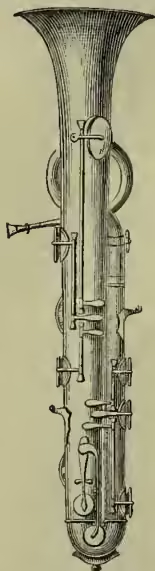
Ophicleide (Gr. ophis, 'serpent,' and kleis, 'key'), a brass bass wind-instrument, was developed from improvements on the Serpent (q.v.) about the beginning of the 19th century. It consists of a conical tube having a bell like that of the horn, a cup mouthpiece, and usually eleven holes stopped by keys like the old Kent bugle. It has the usual harmonic (see HARMONICS) open notes of all brass instruments, its fundamental, never used, being an octave lower. By means of its keys it has a range, including all the semitones, of a little over three octaves, and its music is written in the
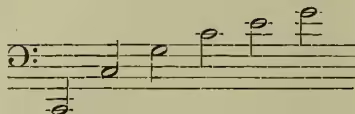
bass clef. Alto and double-bass ophicleides have also been made, but not much used. It is much to be regretted that an instrument of such a characteristically rich tone, and capable of intonation so accurate as the ophicleide, should be allowed to fall completely out of use, it being almost superseded by the simpler three-valved instruments of the Saxhorn (q.v.) type.