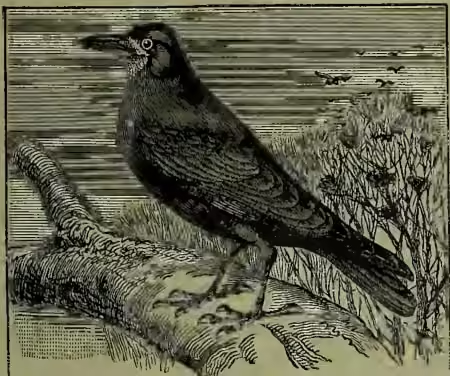
Rook (Corvus frugilegus), a species of Crow, common in Britain and in many parts of Europe and Asia, especially in northern and central regions. In late autumn there is a migration from the Continent to the eastern shores of Britain, and a return in early spring. Some of the characters of the rook have been contrasted with those of other species of Corvns in the article CROW. The plumage is bluish black; the forehead, cheeks, and throat are bare; the bill, legs, and feet are black. White and piebald spots sometimes occur. The rook does not breed till it is about two years old. The nest, built of twigs with a lining of grass and roots, is almost always on a lofty tree. The noisy cawing of the builders in March is one of the familiar signs of departing winter. The eggs (three to five) are bluish green with olive-brown markings. As to food, the rook is almost omnivorous, but it depends in great part on insects and grubs. Unlike the crow, the rook is characteristically a social bird, feeding in great flocks, nesting in rookeries, and sometimes combining to beat off a common foe. Confident perhaps in their numerical strength, and reliant on their habit of posting sentinels, rooks are by no means shy, for they sometimes nest in the trees of a town garden, and, though much afraid of a gnu, soon grow accustomed to searcrows and noise. They are very wide-awake birds, exhibiting no small degree of that acuteness which is often displayed by gregarious birds and beasts. They show sagacity in choosing fit trees on which to nest, in posting sentinels who warn the others when danger threatens, and in distinguishing real from fictitious sources of alarm. Though quarrelling and mutual robbery are common during the nest-building, there is no doubt that rooks have a sort of social feeling, which manifests itself sometimes in the punishment which they inflict on an offending member. The same rooks seem to take possession of their old nests year after year, repairing the damage done by the winter storms. The male rook feeds the female assiduously during incubation, and sometimes takes her place on the nest. Both parents bring food to their young ones, and the nestlings are provided with little stones essential to the grinding of the food in the gizzard. The rook can be tamed, and may exhibit something of the imitative power possessed by several related birds. While rooks are useful in so far as they destroy many injurious insects and grubs, they sometimes damage trees by breaking off the twigs, they root up grass and young corn, and do other damage to the crops. In moderate numbers they are useful, but in multitudes they are compelled to leave their natural food and become injurious.