Shrike (Lanius), a genus of passerine birds having the bill short and compressed, the upper mandible curved and with a prominent tooth, the base of the bill covered with hairs directed forwards, wings of moderate length, and very powerful feet. They are found in all parts of the world except in South America. They are called Butcher-birds from the habit, common to many species, of impaling their prey upon thorns. The food consists chiefly of insects, but often also of mice, frogs, lizards, and small birds. The Great Gray Shrike
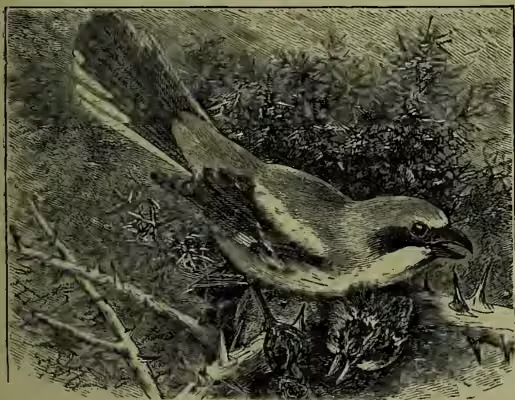
(L. excubitor) visits the British Islands in autumn and winter, but has not been known to breed. It is one of the largest species, its length being 9 to 10 inches. The back is of a light gray colour, wing and tail feathers black tipped with white, bill and legs brownish black. The Lesser Gray Shrike (L. minor) has also been seen in England; but the commonest British species is the Red-backed Shrike (L. collurio), which breeds in wooded districts in England and Wales, and occasionally in the south-east of Scotland. The nest is made of twigs and roots, neatly lined with wool and hair. Only one brood is reared, and the birds usually migrate in August. The males of this, and of some other species, have considerable power of song. In Australia the shrikes are represented by the nearly allied Thickheads (Pachycephala), which abound in the forests throughout that continent and Oceania.