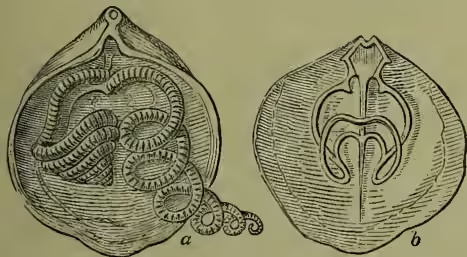
Terebratula, a genus of deep-sea Brachiopods, which, from the resemblance of the ventral valve of their shell to a Grecian lamp in form, are popularly termed Lamp-shells. The shell is symmetrical inequivalve, smooth to the naked eye, but when examined with a lens is seen to be minutely punctated. The ventral valve is the larger, the beak of which is produced and truncated at the apex, which is perforated. The animal is attached to the shell by a bundle of muscular fibres termed the peduncle, which passes through the perforated apex of the ventral valve. There are only two British species. Fossil representatives appear at the conclusion of the Silurian period. Although termed deep-sea forms, Jeffreys considered that 'the nature of the sea-bottom, more than the depth of water, determines the limit of their habitability.'