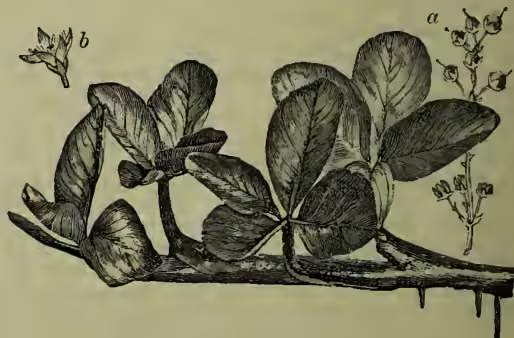
a, fruit; b, a flower.
Buck-bean, or MARSH TREFOIL (Menyanthes trifoliata), a species of Gentianaceæ (q.v.), widely distributed in all the colder parts of the northern hemisphere, common in Britain, and not rare in the northern parts of the United States and in Canada. It is easily recognised by its trefoiled leaves, and its small white or pink shaggy flowers.
These are dimorphic, like Primrose (q.v.) or Lythrum. It grows in marshy places, its creeping root-stocks and densely matted roots often rendering boggy ground firm. It is a traditional tonic and febrifuge in rustic and veterinary medicine, especially in Germany, and is also sometimes employed to give bitterness to beer. The root-stock was formerly used as a source of starchy food in Northern Europe.