Jerusalem Artichoke, or TOPINAMBURI (Helianthus tuberosus), a plant of the natural order Compositæ, and of the same genus with the common Sunflower (q.v.), is a native of Brazil. The word Jerusalem, in the English name, is a corruption of the Italian girasole, 'sunflower;' the name artichoke is merely from a supposed similarity of flavour in the eatable part—the tuber—to the Globe artichoke. The Jerusalem artichoke has straight, sparsely branching stems from 8 to 12 feet high, and many rough, ovate, acute stalked leaves; and in the end of autumn, though rarely in Scotland, produces yellow flowers resembling those of the common sunflower, but smaller.
The thick, fleshy, and knotted perennial root produces, pretty closely around it, oval or roundish tubers, sometimes thirty or fifty in number, which are reddish on the outside, and whitish within, in appearance very similar to potatoes. They have a sweetish, mucilaginous taste when boiled, and are much more watery and less nourishing than potatoes. They are, however, very palatable, when properly prepared with sauce, and make very good soup. The plant is also useful for fodder for cattle, yielded by its leaves and the more tender parts of the stems. The stems and leaves contain much nitre, and have been used for making potash. The fibre is used for making cordage and coarse cloth.
The Jerusalem artichoke is scarcely an agricultural crop in Britain, although it is to some extent in some parts of Europe. It was known in English gardens before the potato, to which it in some measure gave place. It is generally propagated by small tubers, or cuttings of tubers, like the potato; and its cultivation is in most respects similar, although the aspect of the plant is very different. In America it is sometimes called Canada potato or Virginia potato.
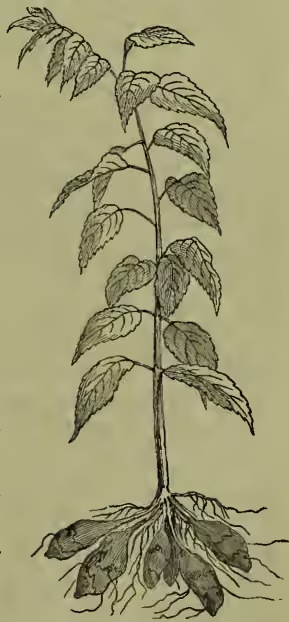
(Helianthus tuberosus).