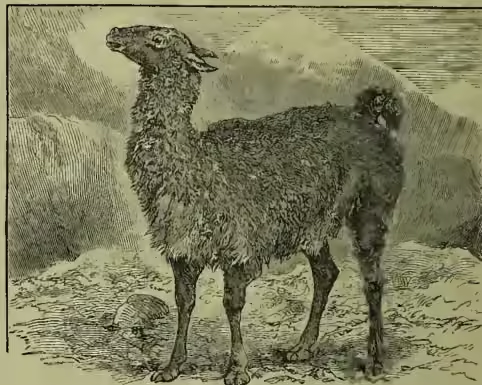
Llama, or LAMA (Auchenia lama), a most useful South American ruminant of the camel family. It is probably a domesticated variety of the guanaco (Auchenia guanaco), whose herds roam with the rheas on the plains of Patagonia, or climb on the Cordilleras. As a beast of burden the llama was in general use at the time of the Spanish conquest, and its sure-footedness and power of foraging for itself make it most valuable for transport in the rough and steep mining regions of the Andes. In many places, however, mules have to some extent replaced the llamas. The males carry a hundredweight about twelve miles in a day. The females, which are kept for breeding, are smaller and less strong than the males. The animal is larger and stouter than the allied species the Alpaca (q.v.), stands about three feet high at the shoulders, and keeps its head raised. It is gentle and docile, but is likely enough to squirt its yellow spittle in the face of tormentors. The hair, which may be black or white, reddish or yellowish, is too rough to be much used except for coarse materials and string; the flesh of the young animal is good to eat.