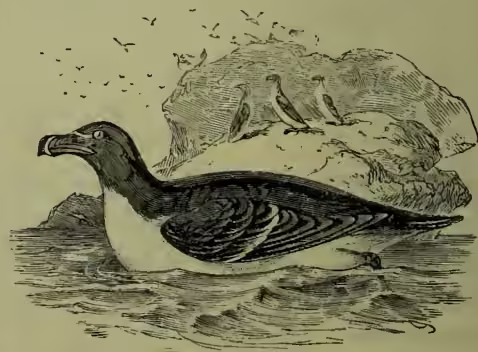
Razor-bill, or RAZOR-BILLED AUK (Alca torda), a species of Auk (q.v.), very common on the coasts of Britain and of all the northern parts of the Atlantic Ocean. In March and April they congregate in great numbers on cliffs and islands for the breeding season. A single egg, measuring about 3 inches in length, and of a white or light brown colour streaked with dark brown, is laid in a crevice or under a ledge of rock. The male helps to sit on the eggs. The razor-bill measures about 17 inches. The plumage is of a glossy greenish black on the upper parts and dazzling white underneath. It is a handsomer bird than the Guillemot (q.v.), and can be readily distinguished from it at a distance by its upturned tail. The flesh of the razor-bill is used for food, and the eggs are esteemed a delicacy. They are less easily obtained than those of the guillemot, being usually laid in concealed situations.