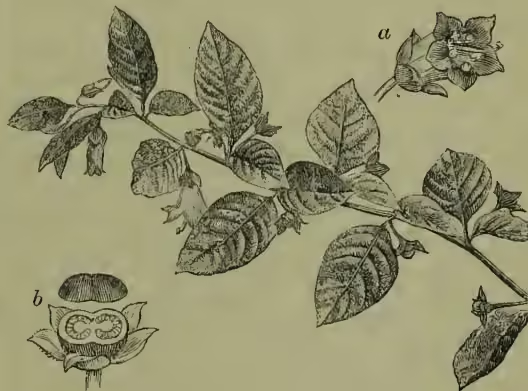
a, flower; b, fruit.
Belladonna, DWALE, or DEADLY NIGHT-SHADE (Atropa belladonna; Belladonna, Ital. 'fair lady,' see below; atropa, Gr. Atropos, one of the Fates; dwale, from A.S., connected with dull, from its stupefying effects), a plant of the natural order Solanaceæ (q.v.); a herbaceous perennial, growing up every year as a bush, from 2 to 4 feet high, with ovate entire leaves, and bell-shaped flowers of a lurid purple colour, which are fully larger than those of the common harebell, stalked and solitary in the axils of the leaves. It produces berries of the size of a middle-sized cherry, and which, when ripe, are of a shining black colour, and of a sweetish and not nauseous taste, although the whole plant has a disagreeable heavy smell. It is a native of the southern and middle parts of Europe, and is not uncommon in Britain, in the neighbourhood of towns and of ruins, and flowers from June to November. All parts of the plant are narcotic and poisonous, and fatal consequences not unfrequently follow from the eating of its berries, which have an inviting appearance. Its roots have sometimes been mistaken for parsnips. It owes its poisonous properties to the presence of the alkaloid Atropia (q.v.), which is found in all parts of the plant. Large doses either of belladonna or atropia produce dryness of the mouth and throat, dilatation of the pupils, dimness of vision, bright redness or an actual rash on the skin, quickening of the pulse and respiration, talkative delirium, sometimes convulsions; at a later stage complete paralysis, stupor, and death. The treatment in cases of poisoning consists in the prompt use of emetics; and thereafter in the administration of stimulants, especially strong coffee; vegetable astringents, as tannin; and Calabar bean. In medicinal doses belladonna and atropia are used to relieve spasms, as in colic, whooping-cough; to check excessive secretions—e.g. of sweat, milk, saliva; as an antidote in poisoning by opium, Calabar bean, and prussic acid; and for many other purposes. Local application, in the form of liniment, ointment, or plaster, is often more efficacious, especially in the relief of pain, than internal administration. Belladonna has been recommended as a preventive of scarlet fever, apparently on the ground of its tendency, when administered in frequent small doses, to produce an eruption and an affection of the throat somewhat similar to those characteristic of that disease; but the evidence of its utility for this purpose is not sufficient to warrant confidence. But perhaps the most important medicinal use of belladonna, and especially its alkaloid, is in the treatment of diseases of the eye (see EYE, DISEASES OF), in many of which its action is invaluable. Its power of enlarging the pupil and giving a glistening appearance to the eyes, has long been used to enhance the female charms; hence the name. For the Common Nightshade, see NIGHTSHADE; for the Woody Nightshade, see BITTERSWEET.